
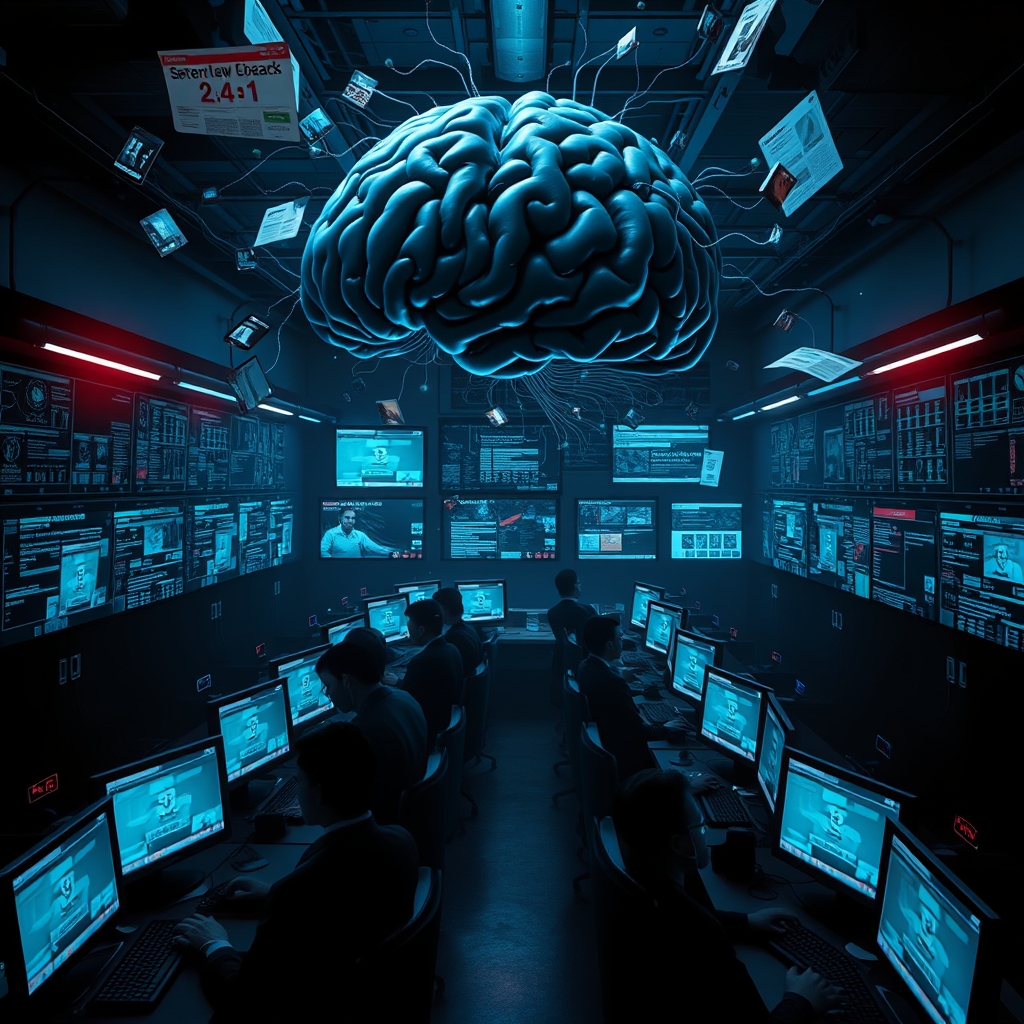
Oh, look—another day, another breaking news alert that’s neither breaking nor news. The news business has mastered the art of making you feel like you’re on the edge of your seat, even when you’re just sinking deeper into the couch, scrolling through the same recycled outrage with the enthusiasm of a sloth on sedatives. Congratulations, you’re not just a consumer; you’re a participant in the world’s most exhausting reality show, where the prize is a slightly elevated blood pressure and the grand finale is the realization that you’ve been had.
The Algorithm Knows You Better Than Your Therapist
Remember when news was something you sought out because you actually wanted to be informed? Those were the days—back when “doomscrolling” was just called “reading the newspaper” and didn’t come with the side effect of existential dread. Now, the news business doesn’t just report on your interests; it manufactures them. Algorithms have become the new editors-in-chief, and their only job is to keep you hooked, like a digital dealer slipping you another hit of “You Won’t Believe What Happens Next!”
These algorithms don’t care about truth, context, or your mental well-being. They care about engagement, and nothing engages like a good old-fashioned moral panic. Whether it’s a celebrity scandal, a political gaffe, or the latest viral outrage, the formula is the same: take something trivial, blow it up to apocalyptic proportions, and watch as the masses descend into a feeding frenzy of hot takes and Twitter threads. The news business isn’t in the business of informing you; it’s in the business of keeping you in a perpetual state of low-grade anxiety, because an anxious audience is a captive audience.
The Outrage Industrial Complex
Outrage is the lifeblood of the modern news cycle. It’s cheap to produce, endlessly renewable, and, best of all, it requires no actual journalism. Why bother with investigative reporting when you can just slap a provocative headline on a half-baked opinion piece and let the internet do the rest? The news business has turned indignation into a commodity, and we’re all just cogs in the machine, dutifully sharing, liking, and commenting our way to the next dopamine hit of self-righteousness.
And let’s not forget the symbiotic relationship between the news and social media. Platforms like Twitter and Facebook aren’t just where we consume news; they’re where news is born, nurtured, and weaponized. A single tweet can spark a national conversation (or at least a national meltdown), and before you know it, every outlet from CNN to your local Patch.com is covering it like it’s the second coming of Watergate. The line between news and noise has never been blurrier, and the news business is perfectly happy to keep it that way.
The Illusion of Choice
You’d think with so many news outlets vying for your attention, you’d have more options than ever. But in reality, the news business is more consolidated than a tech bro’s crypto portfolio. A handful of corporations control the vast majority of what you see, hear, and read, and their interests are rarely aligned with yours. Whether it’s Fox News, MSNBC, or your favorite “independent” blog, the goal is the same: keep you watching, clicking, and coming back for more.
And don’t even get started on the illusion of “balance.” The news business loves to pretend it’s giving you both sides of the story, but what it’s really giving you is a false equivalence between facts and fiction, expertise and hot air. Climate change? “Some say it’s real, others say it’s a hoax—you decide!” Vaccines? “Scientists say they’re safe, but have you heard about this one guy’s blog?” The news business doesn’t want you to think critically; it wants you to stay in the middle, where the outrage is hottest and the ad revenue is flowing.
The Future of News: More of the Same, But Worse
If you think the news business is bad now, just wait until AI gets its grubby little hands on it. Already, we’re seeing the rise of algorithmically generated news stories, where bots churn out articles faster than a caffeine-addled intern on deadline. These stories aren’t just bad; they’re soulless, devoid of any human insight or nuance. But hey, they’re cheap, and in the news business, cheap always wins.
And let’s not forget the rise of “deepfake” news, where AI-generated videos and audio clips make it nearly impossible to tell what’s real and what’s not. The news business has always been about selling a narrative, but soon, it won’t even need a kernel of truth to do it. Why bother with facts when you can just create your own reality? The future of news isn’t about informing the public; it’s about controlling it, one click at a time.
The Attention Economy’s Greatest Con
At the end of the day, the news business is just another cog in the attention economy, a system designed to monetize your focus, your emotions, and your outrage. It doesn’t matter if the news is real, important, or even coherent—what matters is that it keeps you engaged long enough to serve you another ad. The news business isn’t here to enlighten you; it’s here to exploit you, and it’s doing a damn good job of it.
So the next time you find yourself doomscrolling at 2 a.m., ask yourself: Who’s really benefiting from this? Spoiler alert: It’s not you. The news business has turned your curiosity into a commodity, your outrage into a product, and your attention into the most valuable currency of all. And the worst part? You’re not just the customer—you’re the product. Enjoy the show.
You may also like
-
The News Business: Where the Only Thing More Infinite Than the Scroll Is Your Diminishing Faith in Humanity
-
The News Business: Where the Only Thing More Exhausting Than the News Cycle Is Pretending You Understand It
-
The News Business: Where Your Outrage is the Product and You’re the Unpaid Intern
-
The News Business: Where the Truth is a Commodity and Your Brain is the Market
-
The News Business: Where the Only Thing More Broken Than the System Is Your Attention Span